Skip to yearly menu bar Skip to main content


Keynote Sep 10, 3:00 PM - 4:00 PM Arena Room

Kristen Grauman

Kristen Grauman
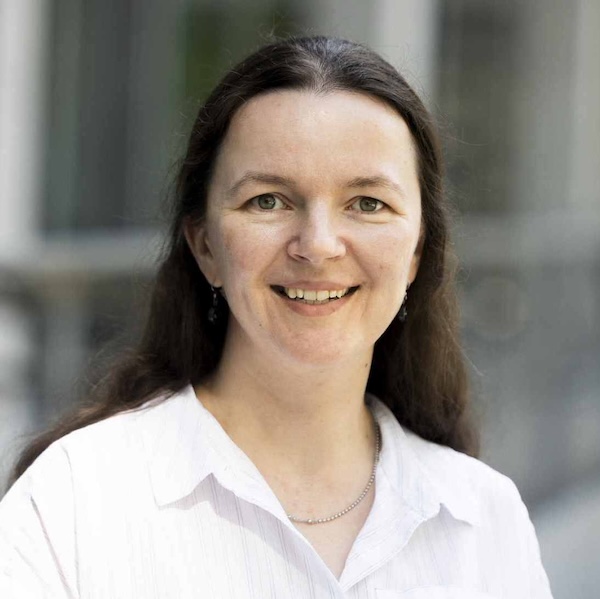
Kristen Grauman is a Professor in the Department of Computer Science at the University of Texas at Austin. Her research in computer vision and machine learning focuses on video understanding and embodied perception. Before joining UT-Austin in 2007, she received her Ph.D. at MIT. She also held previous positions as a Director in the Fundamental AI Research lab (FAIR) at Meta, a postdoctoral fellow at MIT, and a visiting research fellow at the Lawrence Berkeley National Laboratory. She is an IEEE Fellow, AAAS Fellow, AAAI Fellow, Sloan Fellow, a Microsoft Research New Faculty Fellow, and the recipient of the 2026 Hill Prize in AI, the 2025 Huang Prize, NSF CAREER and ONR Young Investigator awards, the PAMI Young Researcher Award, the 2013 Computers and Thought Award from the International Joint Conference on Artificial Intelligence (IJCAI), and the Presidential Early Career Award for Scientists and Engineers (PECASE). She was inducted into the UT Academy of Distinguished Teachers in 2017. She and her collaborators have been recognized with several Best Paper awards in computer vision, including a 2011 Marr Prize, a 2017 Helmholtz Prize (test of time award), and three EgoVis Distinguished Paper awards in 2024 and 2025. She served for six years as an Associate Editor-in-Chief for the Transactions on Pattern Analysis and Machine Intelligence (PAMI) and for ten years as an Editorial Board member for the International Journal of Computer Vision (IJCV). She also served as a Program Chair of the IEEE Conference on Computer Vision and Pattern Recognition (CVPR) in 2015, Neural Information Processing Systems (NeurIPS) in 2018, and IEEE International Conference on Computer Vision (ICCV) in 2023.
View full details
Panel Sep 10, 4:00 PM - 4:30 PM Arena Room

The Age of LLMs: Who Is the Researcher Now?: How LLMs Are Changing Search, Ideation, and Scientific Judgment

Anna Rogers
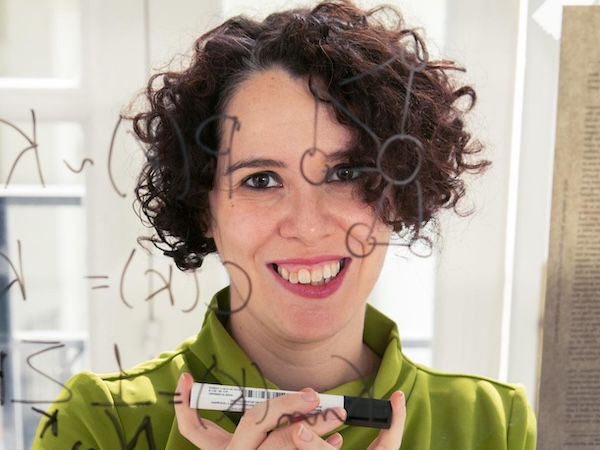
Anna Rogers is a tenured Associate Professor in the Data Science Section at the IT University of Copenhagen, affiliated with the NLPNorth research group. Her work focuses on interpretability and robustness of NLP applications based on Large Language Models, as well as their sociotechnical impacts. She is currently an editor-in-chief of ACL Rolling Review, the peer review platform for all major NLP conferences. She is also one of the chief scientists of the National Centre for Artificial Intelligence in Society (CAISA).
Roberta Sinatra
Roberta Sinatra is Professor of Computational Social Science at the University of Copenhagen (KU) and at the IT University of Copenhagen (ITU), and External Faculty at the Complexity Science Hub in Austria. She co-founded the NEtwoRks, Data, and Society (NERDS) research group at ITU, which she led from 2019 to 2022, and is co-lead of the Pioneer Centre for AI in Copenhagen. Her research sits at the intersection of network science, data science, and computational social science. She has received several awards, including the Complex Systems Society Junior Prize, the DPG Young Scientist Award for Socio- and Econophysics, a Villum Young Investigator grant, and an ERC Consolidator Grant.
Isabelle Augenstein
Isabelle Augenstein is a Professor of Computer Science at the University of Copenhagen, where she co-leads the Danish Pioneer Centre for Artificial Intelligence. Her work on explainability, factuality, and bias in NLP has been recognized with an ERC Starting Grant, the Karen Spärck Jones Award, and election to the Royal Danish Academy of Sciences and Letters.
LLMs are changing how researchers move from the existing literature to new scientific questions. Beyond finding and summarizing papers, these systems can suggest connections across fields, identify possible gaps, propose hypotheses, support experiments, and critique manuscripts. As they move from retrieving information to influencing research directions and evaluation, it becomes increasingly important to ask where assistance ends, and intellectual contribution begins, and which aspects of originality, responsibility, and scientific judgment must remain human.
View full details
Keynote Sep 11, 3:00 PM - 4:00 PM Arena Room

Yann LeCun

Yann LeCun
Yann LeCun is the Executive Chairman of AMI Labs and the Jacob T. Schwartz Professor at NYU affiliated with the Courant Institute - School of Mathematics, Computer Science, and Data Science. He was the Chief AI Scientist at Meta (2018-2025), the founding Director of Facebook AI Research (2013-2017) and of the NYU Center for Data Science (2011-2014). He received an EE Diploma from ESIEE (Paris) in 1983, and a PhD in Computer Science from Sorbonne Université (Paris) in 1987. After a postdoc at the University of Toronto, he joined AT&T Bell Laboratories in 1988. He became head of the Image Processing Research Department at AT&T Labs-Research in 1996, and joined NYU in 2003 after a short tenure as a fellow of the NEC Research Institute. In late 2013, LeCun became Director of AI Research at Facebook, while remaining on the NYU Faculty part-time. He was visiting professor at Collège de France in 2016. His research interests include machine learning and artificial intelligence, with applications to computer vision, natural language understanding, robotics, and computational neuroscience. He is best known for his work in deep learning and the invention of the convolutional network method which is widely used for image, video and speech recognition. He is a member of the US National Academy of Sciences, National Academy of Engineering, and the French Académie des Sciences, a Chevalier de la Légion d’Honneur, a fellow of AAAI and AAAS, the recipient of the 2025 Queen Elizabeth Prize for Engineering, the 2024 VinFuture Grand Prize, 2022 Princess of Asturias Award, the 2014 IEEE Neural Network Pioneer Award, the 2015 IEEE Pattern Analysis and Machine Intelligence Distinguished Researcher Award, the 2016 Lovie Award for Lifetime Achievement, the University of Pennsylvania Pender Award, and honorary doctorates from IPN, Mexico, EPFL, Université Côte d’Azur, HKUST, and Université de Genève. He is the recipient of the 2018 ACM Turing Award (with Geoffrey Hinton and Yoshua Bengio).
View full details
Keynote Sep 12, 9:00 AM - 10:00 AM Arena Room

Jamie Shotton

Jamie Shotton
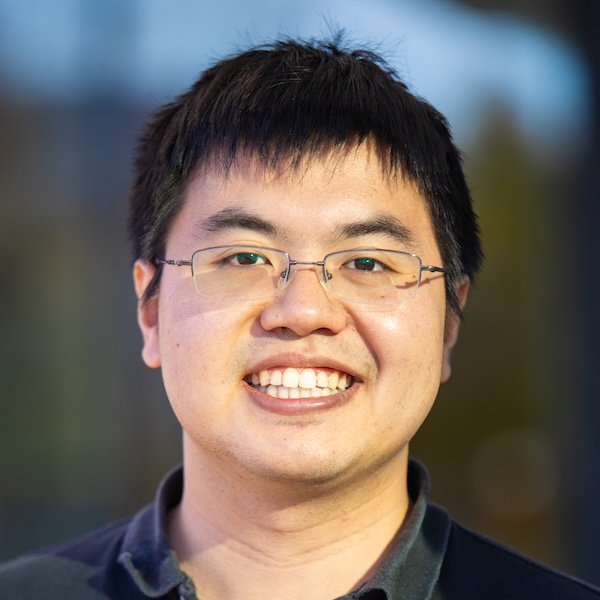
Jamie Shotton is a leader in AI research and development, with a track record of incubating transformative new technologies and experiences from early-stage research to shipping product. He is Chief Scientist at Wayve where he leads Wayve Labs, building foundation models for embodied intelligence, such as GAIA and LINGO, to enable safe and adaptable autonomous vehicles and other robots. Prior to Wayve he was Partner Director of Science at Microsoft and head of the Mixed Reality & AI Labs where he shipped foundational features including body tracking for Kinect and the hand- and eye-tracking for HoloLens. He has explored both fundamental research and applications of AI across autonomous driving, robotics, mixed reality, virtual presence, human-computer interaction, gaming, robotics, and healthcare. He has received multiple Best Paper and Best Demo awards at top-tier academic conferences, and the Longuet-Higgins Prize test-of-time award at CVPR 2021. His work on Kinect was awarded the Royal Academy of Engineering’s gold medal MacRobert Award in 2011, and he shares Microsoft’s Outstanding Technical Achievement Award for 2012 with the Kinect engineering team. In 2014 he received the PAMI Young Researcher Award, and in 2015 the MIT Technology Review Innovator Under 35 Award. He was awarded the Royal Academy of Engineering’s Silver Medal in 2020 and elected a Fellow of the Royal Academy of Engineering in 2021.
View full details
Panel Sep 12, 10:00 AM - 10:30 AM Arena Room

Can AI Build New Knowledge?

Dima Damen
Dima Damen is a Professor of Computer Vision at the University of Bristol and Senior Research Scientist at Google DeepMind. Dima is currently an EPSRC Fellow (2020-2026), focusing her research interests in the automatic understanding of object interactions, actions and activities using wearable visual (and depth) sensors. She is best known for her leading works in Egocentric Vision, and has also contributed to novel research questions including mono-to-3D, video object segmentation, assessing action completion, domain adaptation, skill/expertise determination from video sequences, discovering task-relevant objects, dual-domain and dual-time learning as well as multi-modal fusion using vision, audio and language. She is the project lead for EPIC-KITCHENS, the seminal dataset in egocentric vision, with accompanying open challenges and follow-up works: EPIC-Sounds, VISOR and EPIC Fields, as well as the recent HD-EPIC. She is part of the large-scale consortium effort Ego4D and Ego-Exo4D. She is an ELLIS Fellow, associate editor (AE) of IJCV, and was a program chair for ICCV 2021 and Associate Editor-in-Chief (AEIC) of IEEE TPAMI (2023-2025). She is frequently a Senior Area Chair and Area Chair in major conferences and was selected as Outstanding SAC in ECCV 2024 and Outstanding Reviewer in CVPR2021, CVPR2020, ICCV2017, CVPR2013 and CVPR2012. Dima received her PhD from the University of Leeds (2009), joined the University of Bristol as a Postdoctoral Researcher (2010-2012), Assistant Professor (2013-2018), Associate Professor (2018-2021) and was appointed as chair in August 2021. She supervises 2 postdoctoral researchers, 8 PhD students and 2 Visiting PhD students. At the University of Bristol, Dima leads the Machine Learning and Computer Vision (MaVi) lab (https://uob-mavi.github.io/). At Google DeepMind, Dima is part of the Vision team, led by Andrew Zisserman, focusing on video understanding research. Her latest contribution is to the CVPR 2025 paper: Learning from Streaming Video with Orthogonal Gradients (https://openaccess.thecvf.com/content/CVPR2025/papers/Han_Learning_from_Streaming_Video_with_Orthogonal_Gradients_CVPR_2025_paper.pdf)
Yilun Du
Yilun Du is an Assistant Professor at Harvard in the Kempner Institute and Computer Science. He received his PhD from MIT EECS, advised by Leslie Kaelbling, Tomas Lozano-Perez, and Joshua B. Tenenbaum. He also holds a bachelor's degree from MIT, was a research fellow at OpenAI and a senior research scientist at Google DeepMind. His research focuses on developing intelligent embodied agents in the physical world through generative AI, decision making, and robot learning.
Viorica Patraucean
Viorica Patraucean is a Research Scientist in Google DeepMind, interested in efficient multimodal world models and their evaluation. She is the lead organiser of the annual Perception Test challenge, which tracks progress in multimodal video understanding (at the fourth edition this year at ECCV). She is also the co-founder of the Eastern European Machine Learning summer school, which brings together students and ML experts from all over the world in an Eastern European country, to raise the visibility of this region in the community.
Modern AI systems are remarkably good at using knowledge acquired during large-scale training. But it is still unclear whether they can genuinely build new knowledge from experience: identify what they do not know, acquire the right evidence, form new abstractions, revise their understanding of the world, validate what they have learned, and retain it for future use. One way to view current AI progress is as a human-machine continual-improvement loop. A model is trained; humans inspect its failures; researchers design new datasets, benchmarks, architectures, losses, memory mechanisms, or post-training methods; the model is retrained and evaluated; and the cycle repeats. In this sense, AI systems are improving continually, but much of the knowledge-building still happens outside the model, through human diagnosis and design. The question for next-generation AI is whether more of this loop can be internalized. Can future systems identify their own knowledge gaps, decide what evidence they need, learn from video or interaction, store useful memories and exceptions, validate new knowledge, and update themselves without losing previous capabilities?
View full details

No Events Found

Try adjusting your search terms